
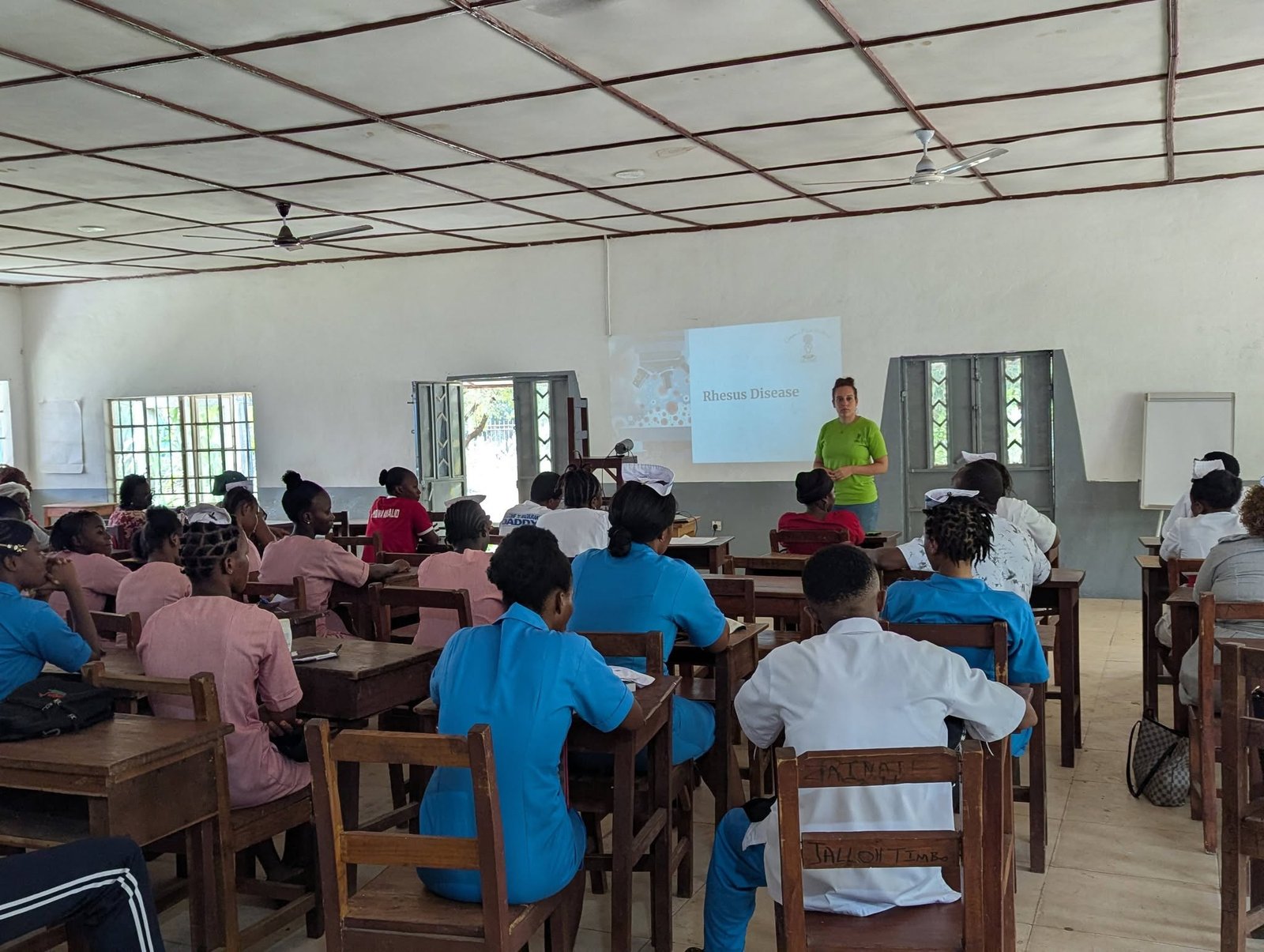
Formation des professionnels de santé
Healthcare workers are not trained about Rhesus disease in Sierra Leone. Therefore they are not able to advise women who are at risk accordingly and they can also misdiagnose babies suffering from its complications.
We are filling this gap by training healthcare professionals in Tonkolili district hospitals and rural health centers, who are the first points of contact for most of the population.
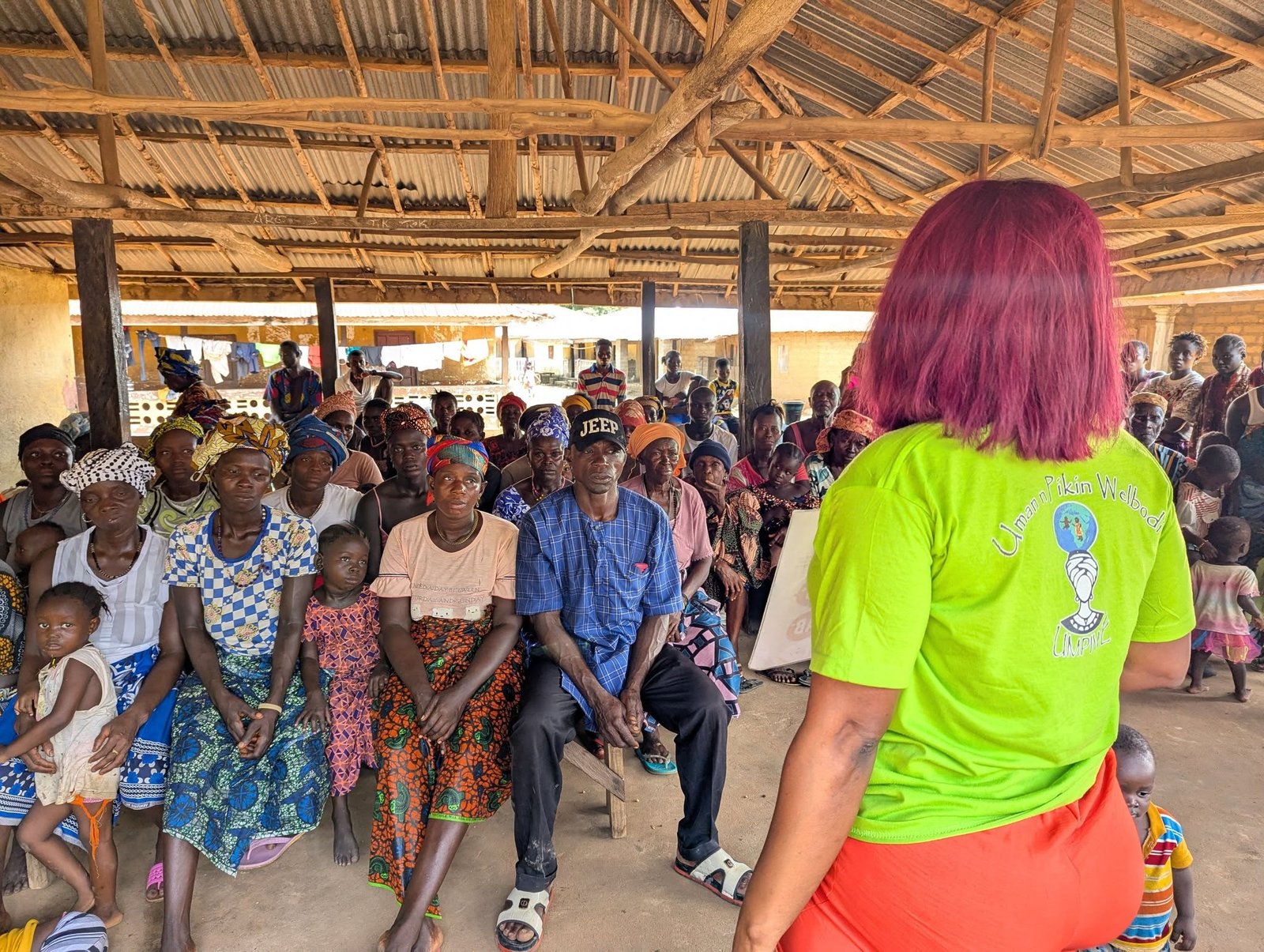
Promotion de la santé et groupage sanguin
We are raising awareness about Rh incompatibility and its potential consequences for the health of unborn babies in rural communities of Tonkolili District. We also discuss other important maternal and child health topics such as malnutrition, malaria, diarrhea, pneumonia and the importance of attending antenatal care clinic.
We are also carrying out blood group testing among the women attending our sessions.
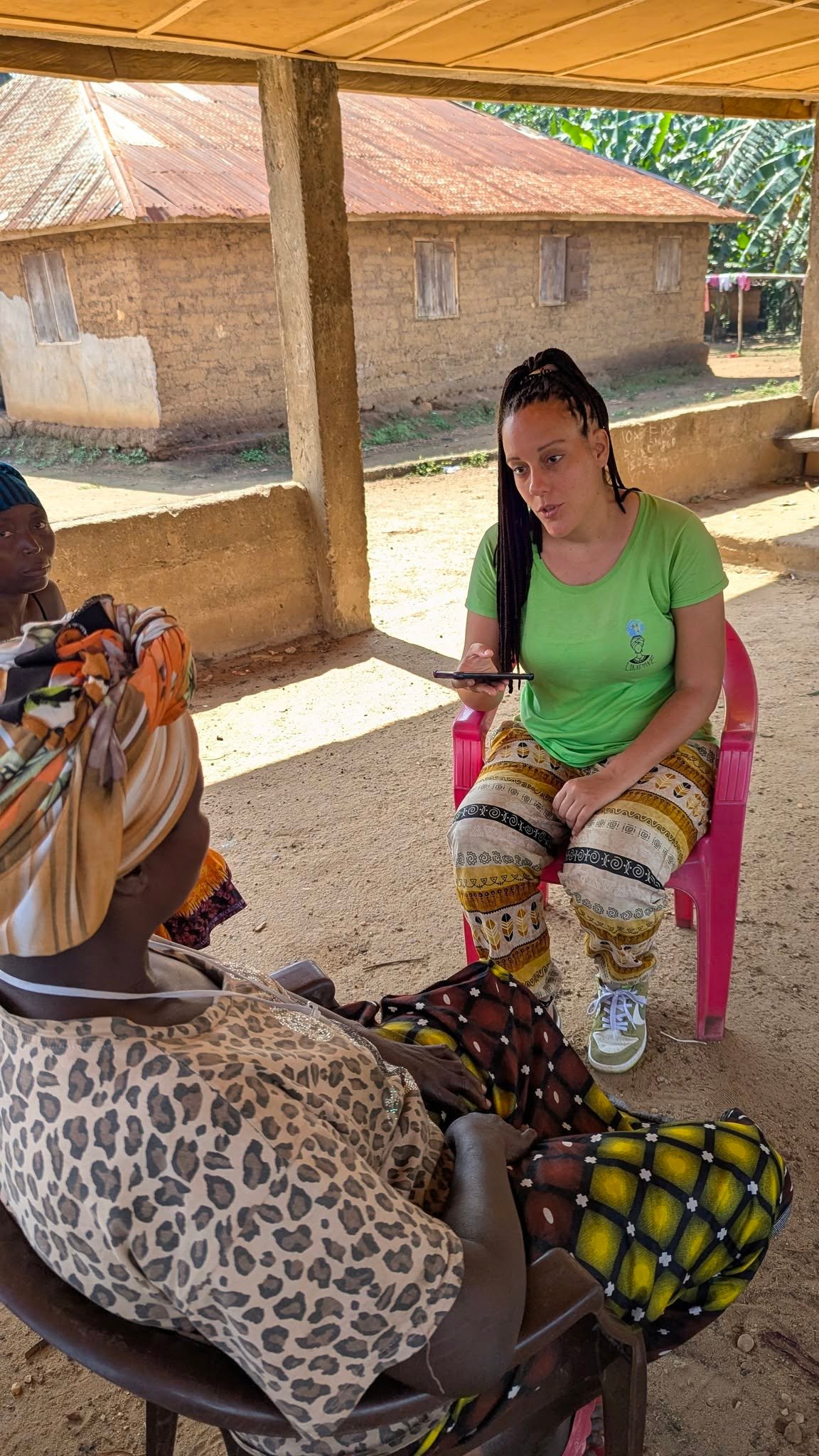
Recherche
We are contributing to a study aimed at documenting blood group and Rhesus (Rh) incompatibility awareness among women in rural Sierra Leone, as well as identifying barriers to accessing antenatal care and evaluating the impact of Rhesus disease in Sierra Leone.
These data will hopefully help us to advocate for the integration of blood grouping testing in the antenatal care package and the access to anti-D immunoglobulin for every woman who needs it.
WHAT IS RHESUS DISEASE ?
Each year, more than 260,000 babies die or suffer lifelong disabilities from Rh disease, a completely preventable condition. These deaths and disabilities happen simply because basic care never reaches the women who need it. Despite decades of medical knowledge, approximately half of pregnant women globally who require anti-D treatment actually receive it.
Rh disease occurs when a mother’s blood type is incompatible with her baby’s. We all have a major blood type: A, B, AB, or O. Most people also have the Rh factor on a small protein on the surface of their red blood cells; this protein determines whether your blood type is positive or negative (for example, A+ or O-).
If a mother does not have the Rh factor (she is “Rh-negative”), but if her baby does (he or she is “Rh-positive”), her immune system can react to the baby’s red blood cells as if they are a threat. The mother’s immune system creates antibodies to the Rh factor that cross the placenta and begin to attack the fetus’ red blood cells. This immune response can lead to dangerous and sometimes fatal complications.
Without preventive care, Rh disease can cause:
- Severe anemia (dangerously low red blood cell levels)
- Fluid buildup in the fetus (hydrops fetalis)
- Brain damage caused by lack of oxygen
- Stillbirth or death shortly after birth
- Jaundice after birth, which can lead to brain damage
Even when babies survive, many are left with lifelong disabilities. The effects ripple outward. Mothers can experience the trauma of pregnancy loss, the challenges of raising a child with complex medical needs, and the emotional burden of stigma, abandonment by partners, and isolation from their communities.
Rh disease is not a mystery, we know how to prevent it. And we do prevent it every day in well-resourced medical systems. With simple blood tests and timely treatment, no family should have to face these outcomes. The knowledge, prevention and treatment exist, and Rh disease is effectively preventable. Yet, millions of women in low-resource regions still lack access to this basic care. What is missing is awareness and access.
THE ABILITY TO PREVENT RH DISEASE EXISTS
In high-income countries, Rh disease has become rare, not because the disease itself has gone away, but because access to routine preventative care has made it almost disappear.
During early pregnancy, women are tested to determine their major ABO blood type and Rh status. If a woman is Rh-negative, her care team knows there may be a risk, especially if her fetus is Rh-positive.
To prevent Rh disease, she receives an injection of anti-RhD immunoglobulin around 28 weeks of pregnancy. This simple, highly effective treatment prevents her immune system from making antibodies to RhD that could harm her baby.
The mother also receives a second dose after birth if her baby is Rh-positive, a critical step that protects future pregnancies. Additional doses may also be needed if she experiences bleeding, miscarriage, or certain medical procedures during pregnancy.
THE SITUATION IN SIERRA LEONE
In Sierra Leone, blood grouping is not part of the routine tests carried out during antenatal care, and very few people know their blood type. As a result, Rh-negative pregnant women have no idea that their babies are at risk because of Rh incompatibility. In addition, the immunoglobulin injection used to prevent this condition is only available in some private hospitals in the capital, Freetown, and at an extremely high cost ($170 for one injection), making it simply unaffordable for the vast majority of Sierra Leonean women.