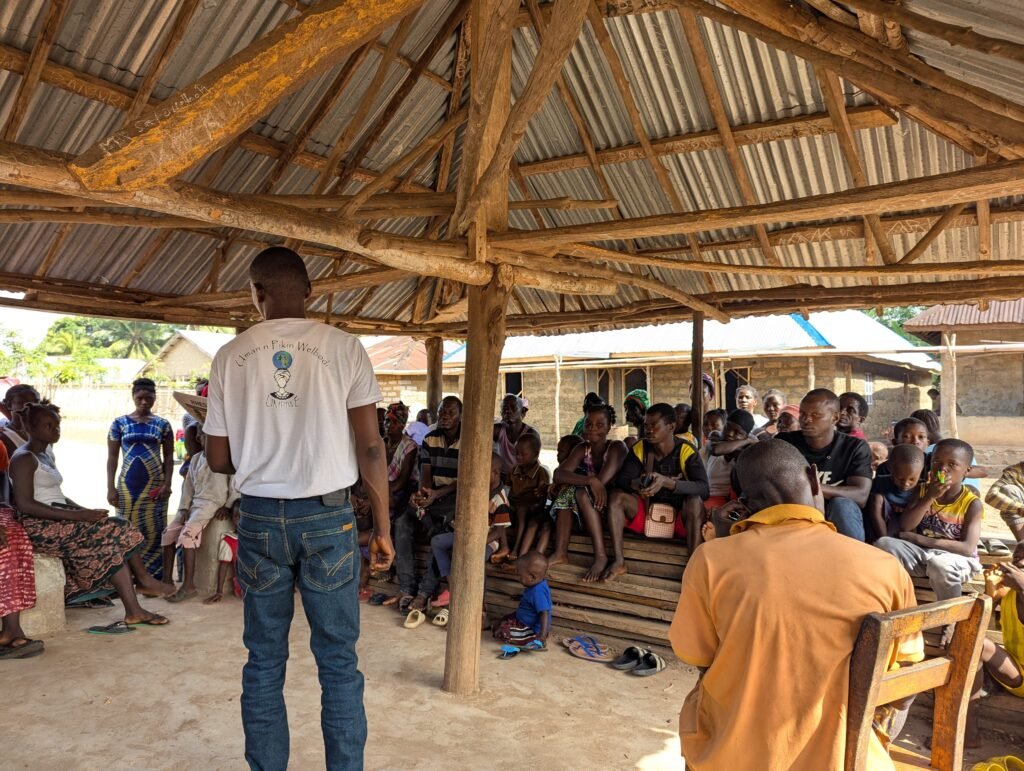
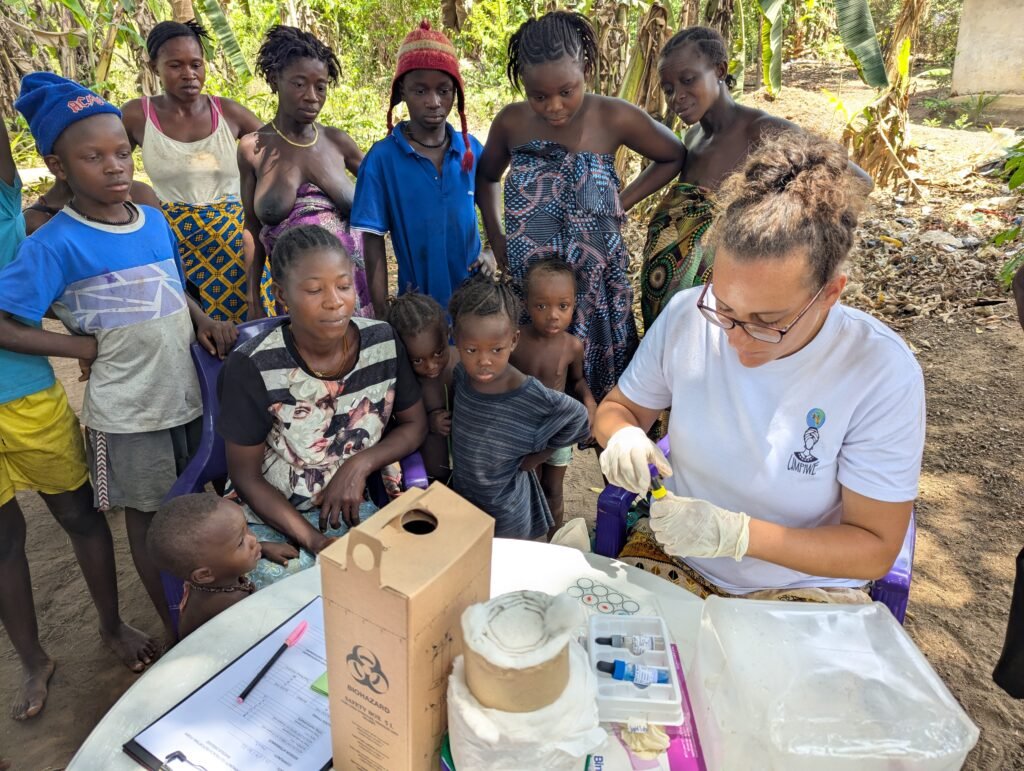
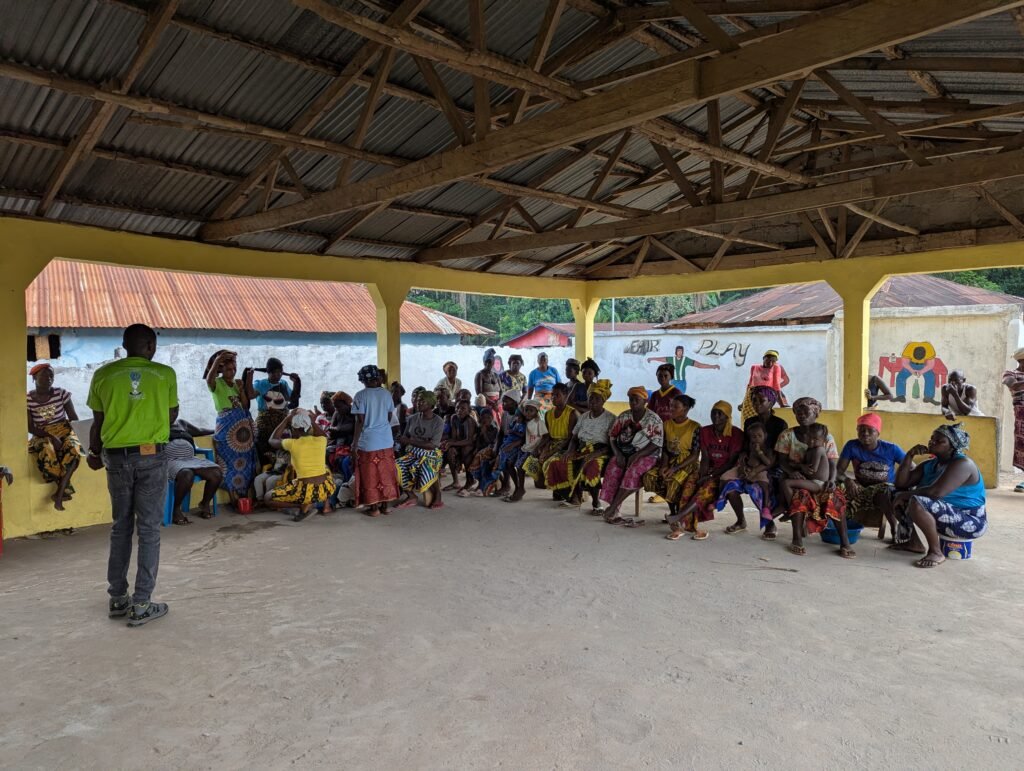
Last week, we resumed our maternal and child health promotion sessions in 4 villages. After discussing childhood pneumonia and Rh incompatibility, we tested 72 women for their blood group and asked them to complete our questionnaire.
In Sierra Leone, blood grouping is not part of the routine tests carried out during antenatal care, and very few people know their blood type. As a result, Rh-negative pregnant women have no idea that their babies are at risk because of Rh incompatibility. In addition, the immunoglobulin injection used to prevent this condition is only available in some private hospitals in the capital, Freetown, and at an extremely high cost ($170 for one injection), making it simply unaffordable for the vast majority of Sierra Leonean women.
By carrying out these blood group tests and administering these questionnaires, we aim to study the impact of Rh incompatibility in rural areas of Sierra Leone and raise awareness among the relevant authorities about this issue.
We sincerely hope that one day blood group determination will become part of the routine tests performed during antenatal care and that all women who need it will receive the injection that can protect their babies.